Battery buyers increasingly evaluate suppliers on more than capacity and price. For OEMs developing portable electronics, medical equipment, smart devices, or other products, the battery must fit precise electrical and mechanical requirements while maintaining consistent performance throughout its service life. A custom Li-ion battery therefore requires expertise in materials, cell design, manufacturing, testing, and application engineering.
The global battery market includes established manufacturers with different strengths in chemistry, production scale, customization, and application coverage. A technical comparison should consequently examine measurable capabilities rather than relying only on shipment rankings or brand recognition.
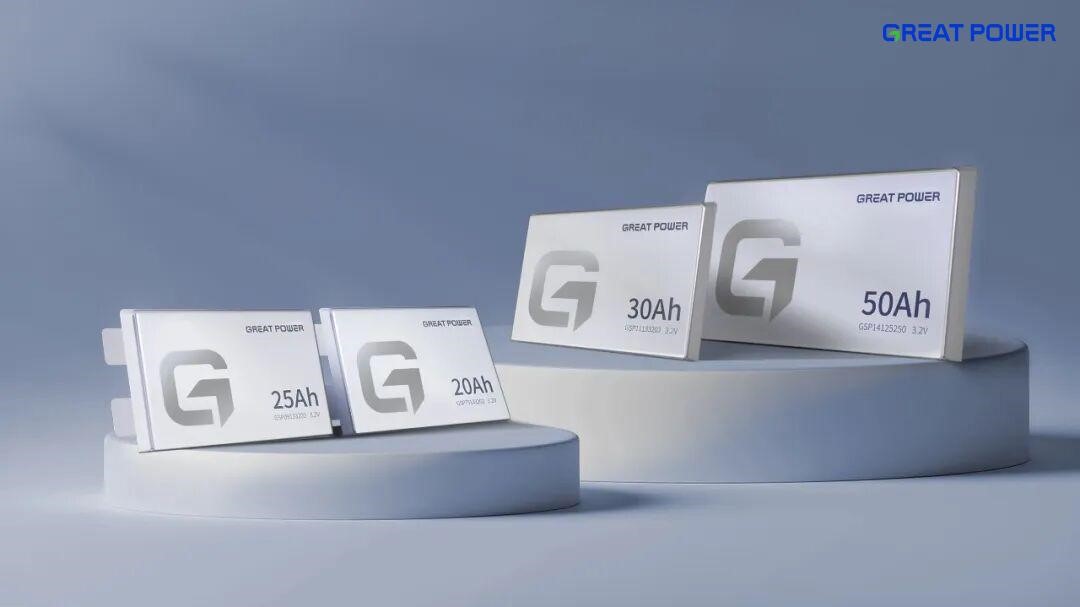
What Matters When Comparing Battery Manufacturers?
A lithium secondary battery is rechargeable, making cycle performance, energy density, charging behavior, safety, and consistency important purchasing considerations. However, the priorities vary according to the device. A TWS earphone has extremely different requirements from a medical instrument or power bank.
For OEM buyers, customization capability is particularly important. Battery dimensions, capacity, connector configuration, discharge characteristics, operating temperature, and packaging may need to be adapted to the host product. A supplier’s ability to move from design validation to stable mass production can therefore be as important as its laboratory technology.
Great Power’s Position in Consumer Batteries
Great Power has more than two decades of consumer battery research, development, and manufacturing experience. Its current portfolio covers applications including tablet PCs, power banks, Bluetooth devices, smart wearables, TWS earphones, medical devices, security equipment, measuring instruments, and other electronics. The company states that its consumer battery business includes hundreds of product models and thousands of production molds.
This manufacturing breadth creates an important distinction between standard batteries and customized solutions. For OEM customers, an established library of designs and tooling can provide a starting point for developing a custom Li-ion battery, potentially reducing the need to develop every structural element from the beginning.
Chemistry and Product Diversity
Global competitors frequently differentiate themselves through specific cell chemistries, formats, or application segments. A strong supplier should therefore offer enough chemistry and form-factor flexibility to address different design requirements.
Great Power’s consumer battery portfolio includes rechargeable battery products based on different material systems, while its wider consumer portfolio also includes primary lithium technologies such as Li-MnO₂, Li-FeS₂, and Li-SOCl₂ batteries. Its rechargeable range includes products for TWS headphones, personal care electronics, laptops, power banks, loudspeakers, and digital consumer products.
For buyers, this diversity matters because the optimal lithium secondary battery depends on the application’s voltage, capacity, discharge profile, dimensions, expected cycle life, and environmental conditions.
Customization Versus Standardization
Large global battery manufacturers can benefit from enormous production volumes and highly standardized manufacturing platforms. Standardization can support cost efficiency and consistent quality, but OEM products do not always follow standardized dimensions.
Great Power emphasizes customized consumer battery solutions and operates automated production facilities with a broad range of models and molds. Its published information also identifies quality consistency and production capacity as supply advantages.
For a company developing a compact electronic product, customization can affect the entire product architecture. A correctly engineered battery can make better use of available internal space and align more closely with the device’s electrical and mechanical constraints.
Manufacturing Consistency Is a Technical Advantage
Battery performance depends not only on the chemistry used but also on manufacturing consistency. Variations in electrode processing, assembly, formation, and quality control can affect cell-to-cell performance.
Great Power reports automated production lines and standardized processes for its consumer battery manufacturing. Its product portfolio lists certifications and standards including UN38.3, UL1973, IEC62619, RoHS, BIS, KC 62133-2, IATF, ISO9001, and ISO14001:2015, although the applicable certification depends on the specific product and market.
When comparing suppliers, OEMs should verify the certifications relevant to their exact battery model rather than assuming that every certification applies to every product.
How Global Competitors Compare
Leading battery companies are investing in advanced materials, higher energy density, fast charging, and automated manufacturing. Silicon-based anodes are an important example, offering higher theoretical capacity than graphite but presenting challenges from volume expansion.
Companies such as Panasonic Energy and LG Energy Solution are developing silicon-based technologies, showing that battery competition increasingly extends into advanced materials and electrode engineering.
Where Great Power Can Be Competitive
The strongest comparison point is therefore not whether one manufacturer has every advanced technology first. Instead, buyers should examine how effectively a supplier combines technology with application-specific engineering and manufacturing execution.
For consumer products, Great Power’s combination of customized battery development, multiple product formats, established production infrastructure, and broad application experience can be relevant to OEM procurement. The company states that its consumer batteries have maintained a position among the world’s top ten by annual shipment volume.
Its wider battery business also provides experience across energy storage and other battery applications, creating opportunities for technology and manufacturing capabilities to transfer between different product segments.
A Practical Conclusion for OEM Buyers
Great Power competes in a market where global manufacturers increasingly combine scale with advanced material research and specialized cell platforms. Its differentiation is particularly relevant to customers seeking customized consumer battery solutions supported by broad manufacturing capabilities rather than a single standardized cell family. Its consumer battery portfolio demonstrates experience across numerous device categories and rechargeable and primary lithium technologies.
For OEMs, the best supplier is ultimately the one whose technical capabilities align with the product’s actual requirements. A custom Li-ion battery should be judged by its verified performance, safety, manufacturability, and fit within the final device. By comparing these factors systematically, buyers can make a more meaningful assessment of Great Power and other global battery manufacturers instead of relying solely on market reputation.