Choosing the right gazebo involves more than comparing roof designs and sizes. The material of the posts also affects the structure’s appearance, maintenance requirements, long-term costs, and overall outdoor atmosphere. For homeowners considering a wood gazebo, the choice often comes down to woodgrain aluminum or natural cedar. Both materials can complement a patio, garden, or backyard seating area, but they offer different benefits.
Understanding how these materials compare can help you choose a gazebo that fits your lifestyle, budget, and design preferences. SUNJOY offers cedar wooden gazebo options for homeowners who appreciate the natural character of real wood and want to create a welcoming outdoor retreat.
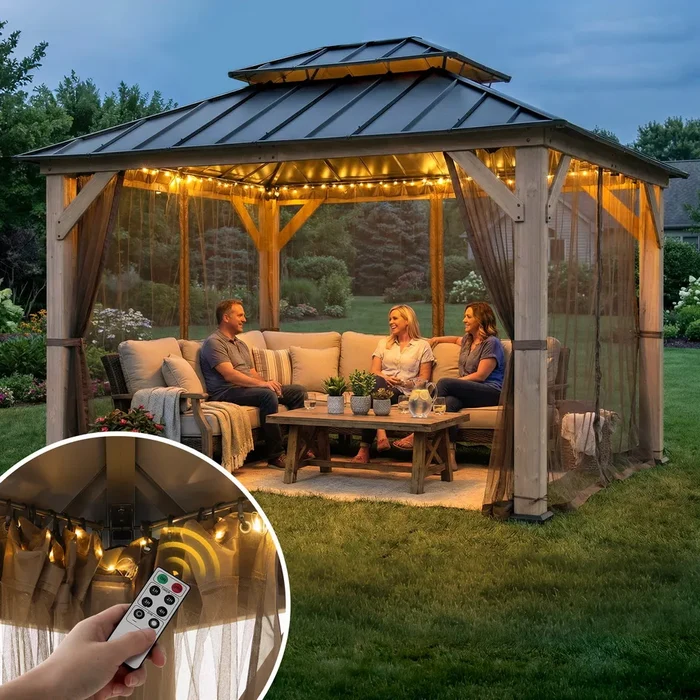
Appearance: Natural Cedar vs. Woodgrain Aluminum
The visual difference between natural cedar and woodgrain aluminum is an important starting point. A cedar wood gazebo features genuine wood grain, natural color variations, and distinctive knots that give each structure its own character. These details create a warm, organic appearance that works well with landscaped gardens, wooden decks, stone patios, and traditional outdoor furniture.
Cedar also develops a different appearance as it ages. When left untreated, its color can gradually weather toward a silvery gray, depending on environmental conditions and exposure. Homeowners who prefer to maintain its original tone can use suitable exterior finishes as part of regular care.
Woodgrain aluminum, by comparison, uses a manufactured finish to reproduce the appearance of timber. It can provide a consistent, wood-inspired look without using real wood for the posts. This makes it suitable for homeowners who appreciate wood aesthetics but prefer a metal structure.
When comparing woodgrain aluminum vs. cedar gazebos, consider how closely you want the material to reflect the natural surroundings. Aluminum offers visual consistency, while cedar provides authentic grain patterns and the subtle variations that make natural wood appealing.
Maintenance: Which Gazebo Requires Less Upkeep?
Maintenance is a practical concern for anyone investing in an outdoor structure. Woodgrain aluminum generally requires less material-specific care because it does not need wood staining or sealing. Periodic cleaning with mild soap and water, along with inspections of the finish, fasteners, and connections, can help keep the structure looking its best. However, aluminum finishes can still become scratched or damaged, and the overall structure requires routine inspection.
A natural cedar wood gazebo needs more attention to preserve its appearance and condition. Dirt, fallen leaves, and standing moisture should be removed regularly, while the posts and beams should be checked for cracks, wear, and signs of deterioration. Depending on the finish, climate, and exposure to sunlight and rain, applying an appropriate outdoor wood oil or protective finish may help maintain the color and protect the surface.
For example, SUNJOY recommends regular outdoor wood oil treatment for its Hampton cedar gazebo frame. Specific care requirements vary by product, so checking the manufacturer’s maintenance instructions is essential.
The right choice depends on how you prefer to spend your time. Aluminum is worth considering if minimal material-specific maintenance is your priority. Cedar may be more appealing if you enjoy the natural look of wood and are comfortable with periodic care.
Cost: Look Beyond the Initial Purchase Price
The upfront price is only one part of a gazebo’s total cost. Woodgrain aluminum and natural cedar models can vary considerably depending on dimensions, roof construction, hardware, finish, and included accessories. Neither material is automatically less expensive across every product category.
When comparing prices, consider the expected maintenance expenses over several years. A woodgrain aluminum gazebo may reduce the need for wood-specific treatments, while a cedar model may require occasional finishing products and additional care. Installation, anchoring, replacement parts, and potential repairs should also factor into your budget.
It is equally important to compare the complete structure rather than the posts alone. A gazebo with a durable hardtop roof, reinforced beams, or built-in provisions for curtains may offer different practical value from a basic model, even if the materials appear similar.
Before purchasing, review the warranty, assembly requirements, weather-resistance specifications, and maintenance guidance. These details provide a more useful basis for comparison than the advertised price alone.
Woodgrain Aluminum vs. Real Wood: Which Fits Your Backyard?
Your outdoor setting can help determine which material feels right. Woodgrain aluminum suits contemporary patios, clean architectural lines, and homeowners who want a consistent timber-inspired finish. Its manufactured appearance can coordinate with modern outdoor furniture without introducing the natural variations found in real wood.
A cedar gazebo offers a different experience. Its authentic texture and warm tones complement garden greenery, natural stone, wooden decking, and classic patio furniture. It can also help a covered seating area feel connected to the surrounding landscape.
Think about how you plan to use the space. A gazebo for outdoor dining, family gatherings, or relaxing beside the garden should feel cohesive with your home’s exterior. Consider the roof style, available space, shade requirements, and opportunities to add lighting, curtains, or mosquito netting.
For homeowners drawn to the warmth of natural materials, SUNJOY’s cedar wooden gazebo collection offers options in different sizes and finishes. Certain models pair cedar framing with a steel hardtop, combining the appearance of real wood with a separate roofing material designed for outdoor use.
Find the Right Balance for Your Outdoor Space
Ultimately, choosing between woodgrain aluminum and natural cedar comes down to your priorities. Aluminum is a practical option for those seeking a wood-inspired appearance with less wood-specific maintenance. Cedar is worth considering when authentic grain, natural warmth, and a traditional outdoor aesthetic matter more.
SUNJOY‘s cedar gazebo designs give homeowners a way to create a comfortable, covered space for dining, entertaining, or everyday relaxation. By comparing maintenance needs, total ownership costs, structural specifications, and visual appeal, you can choose a wood gazebo that suits both your backyard and your long-term expectations.